Launch offer — valid today only

📄 Digital book in PDF · read it on your phone or print it

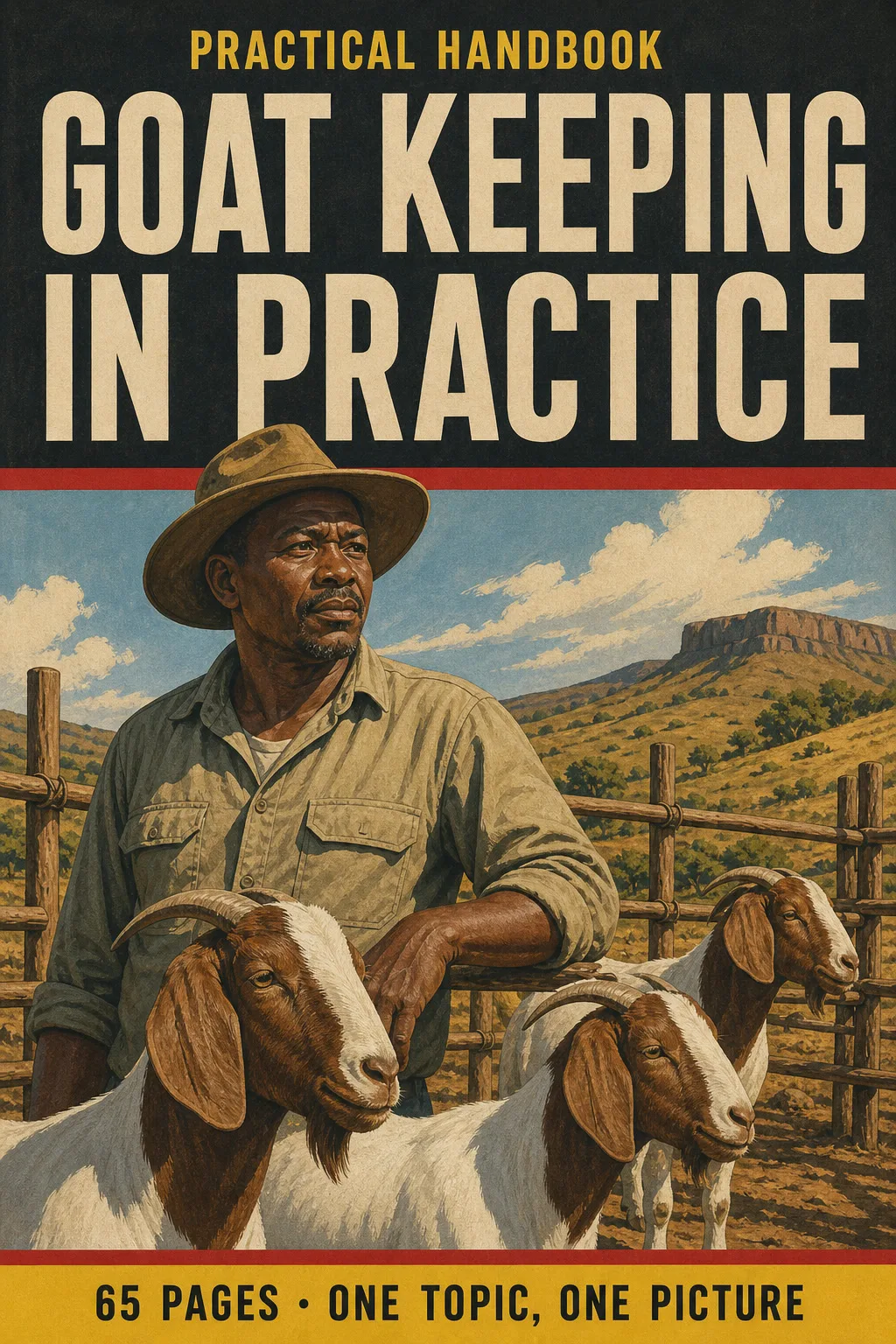
Goat Keeping in Practice: An Illustrated Guide for Small Herds in South Africa The Same Six Checks Every Day

Choosing a healthy goat, shelter and water, feeding and body condition, the daily check, worms and ticks, bloat and other red flags, kidding and kid care, marking and moving goats. Every topic has its own page: first the drawing, then what you need to remember. 65 illustrated pages.

GET GOAT KEEPING IN PRACTICE

🔒 Secure checkout · PDF by email · 30-day guarantee

Every topic, its own pageEach check and warning sign drawn, with the explanation beside it
65 illustrated pages9 parts, from choosing a healthy goat to your goat care box
Up-to-date sourcesDepartment of Agriculture guidance, Animal Diseases Act 35 of 1984 and Animal Identification Act 6 of 2002
PDF by emailFormat

Look Inside the Book

Every page has one large drawing and a box with the numbers, signs and steps you need to know:

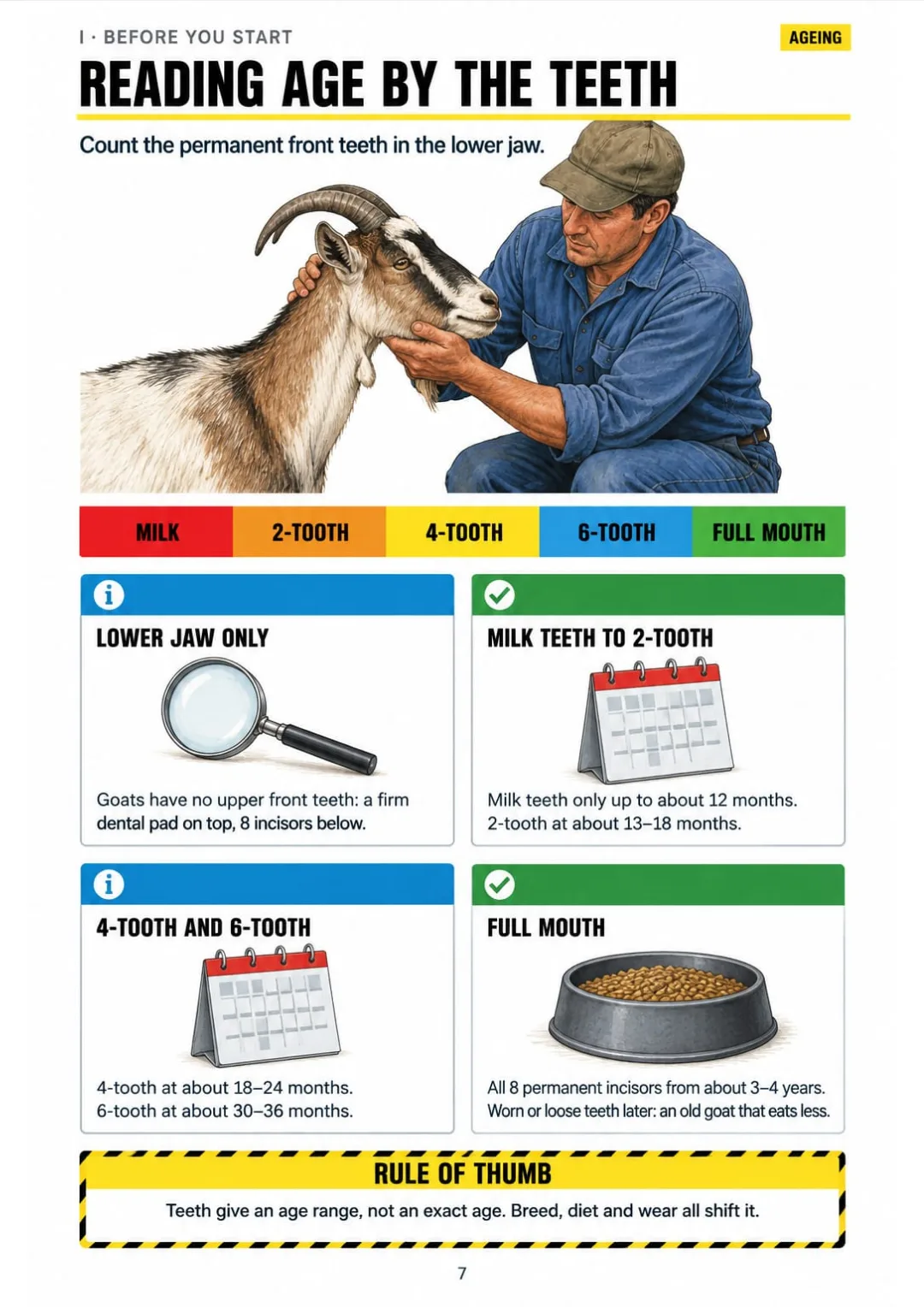
2-tooth about 13–18 months · full mouth from about 3–4 years
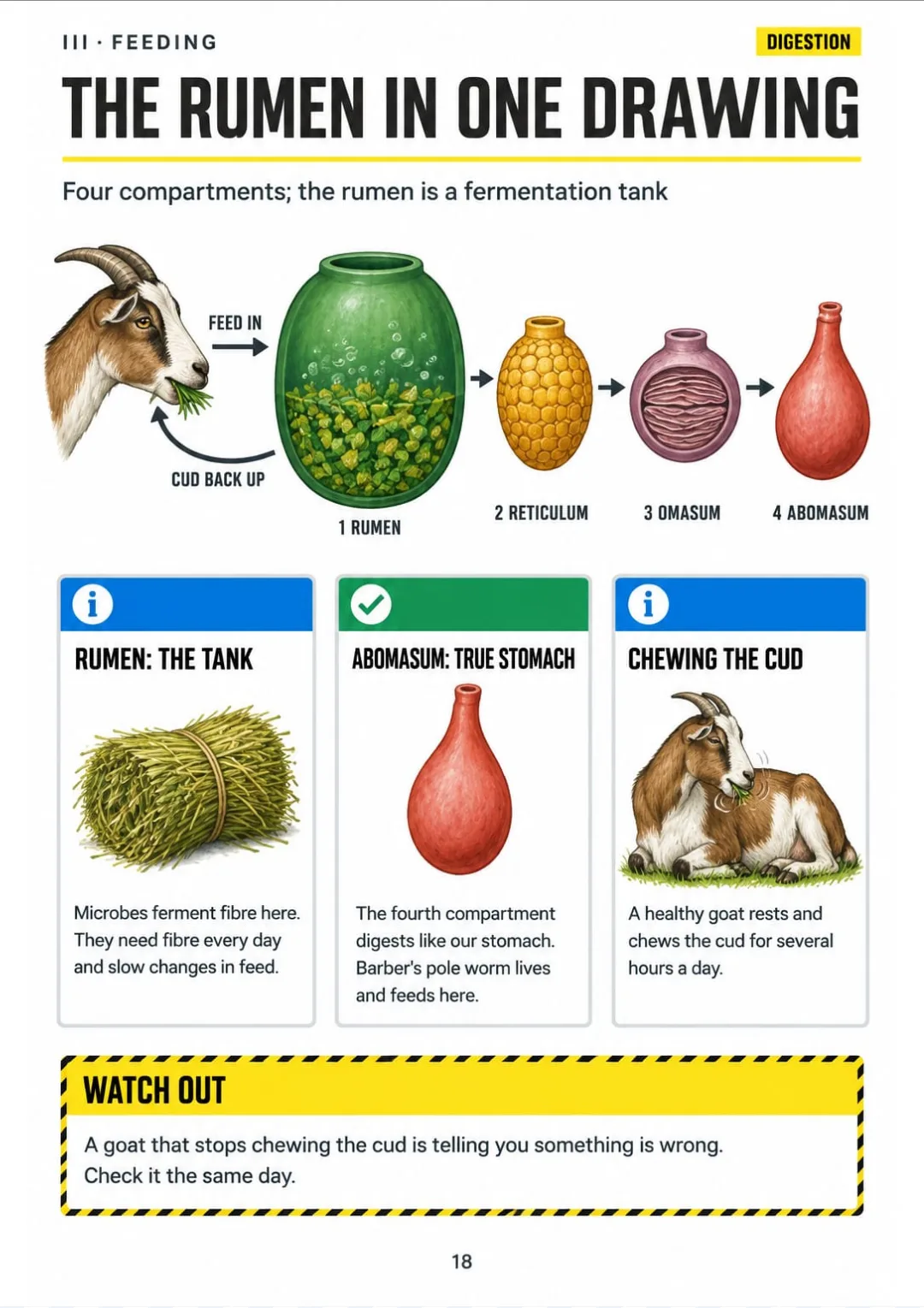
Four compartments, one fermentation tank: fibre every day and a goat that chews the cud.
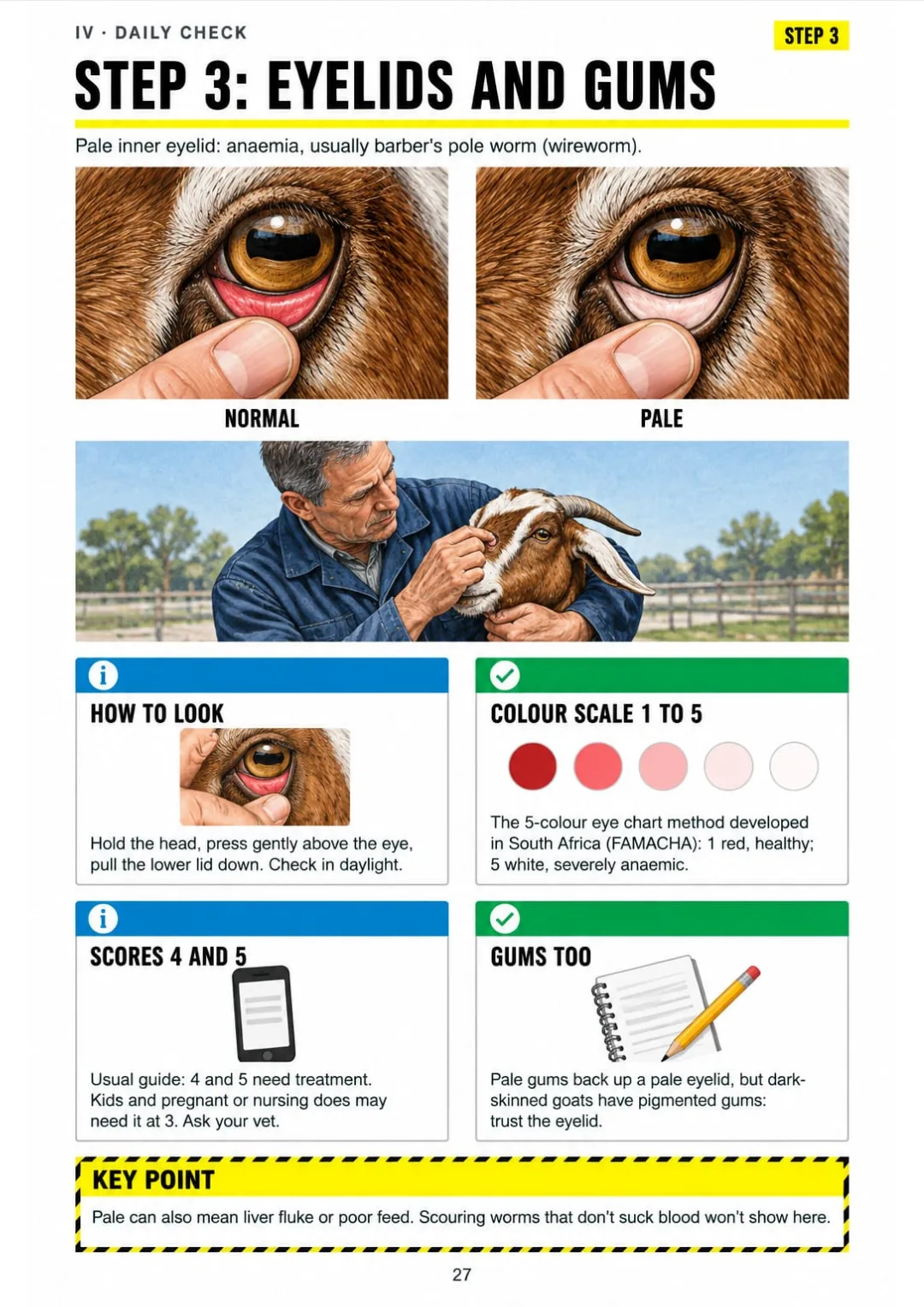
Red-pink eyelid is normal; pale or white points to anaemia from wireworm.
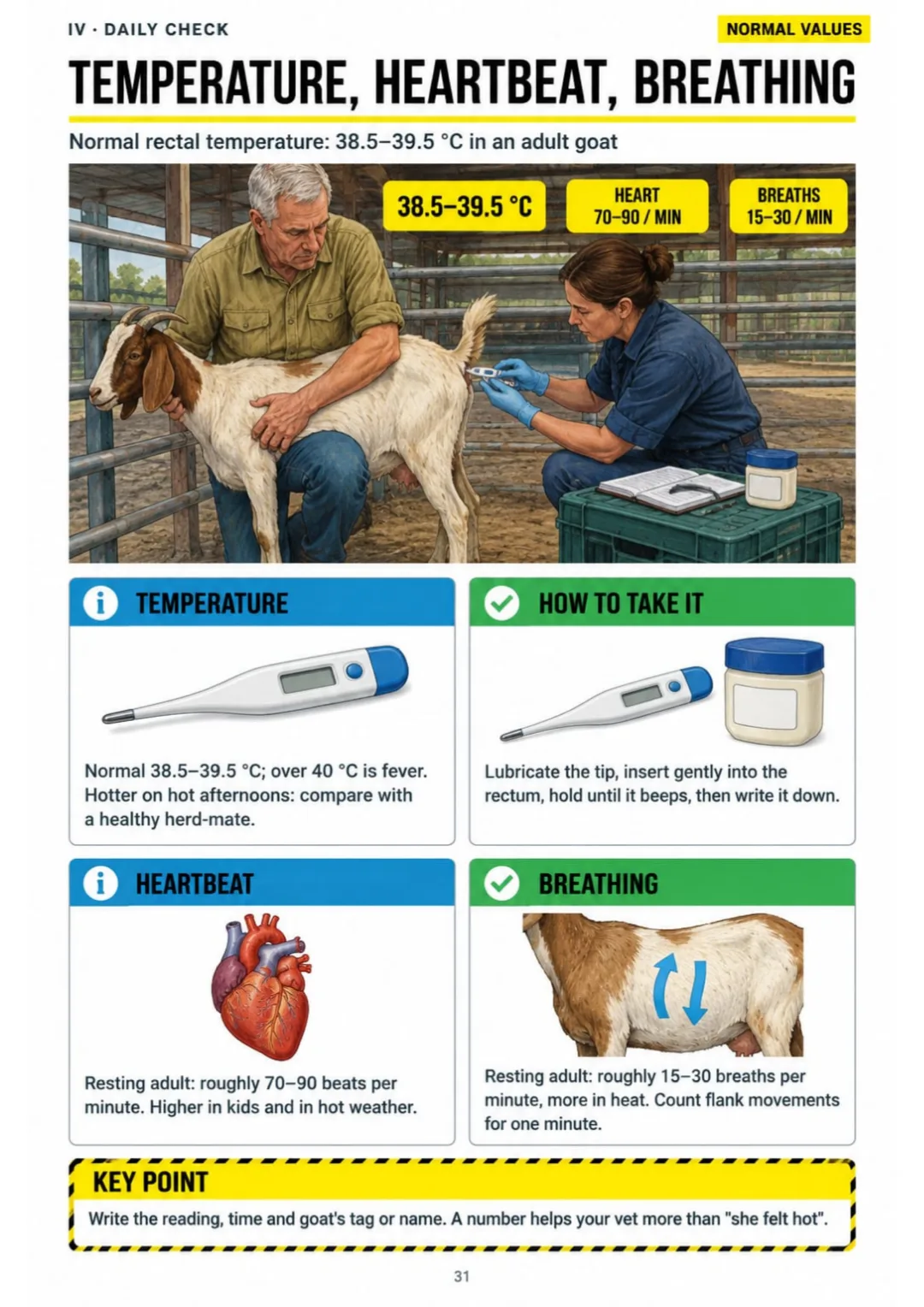
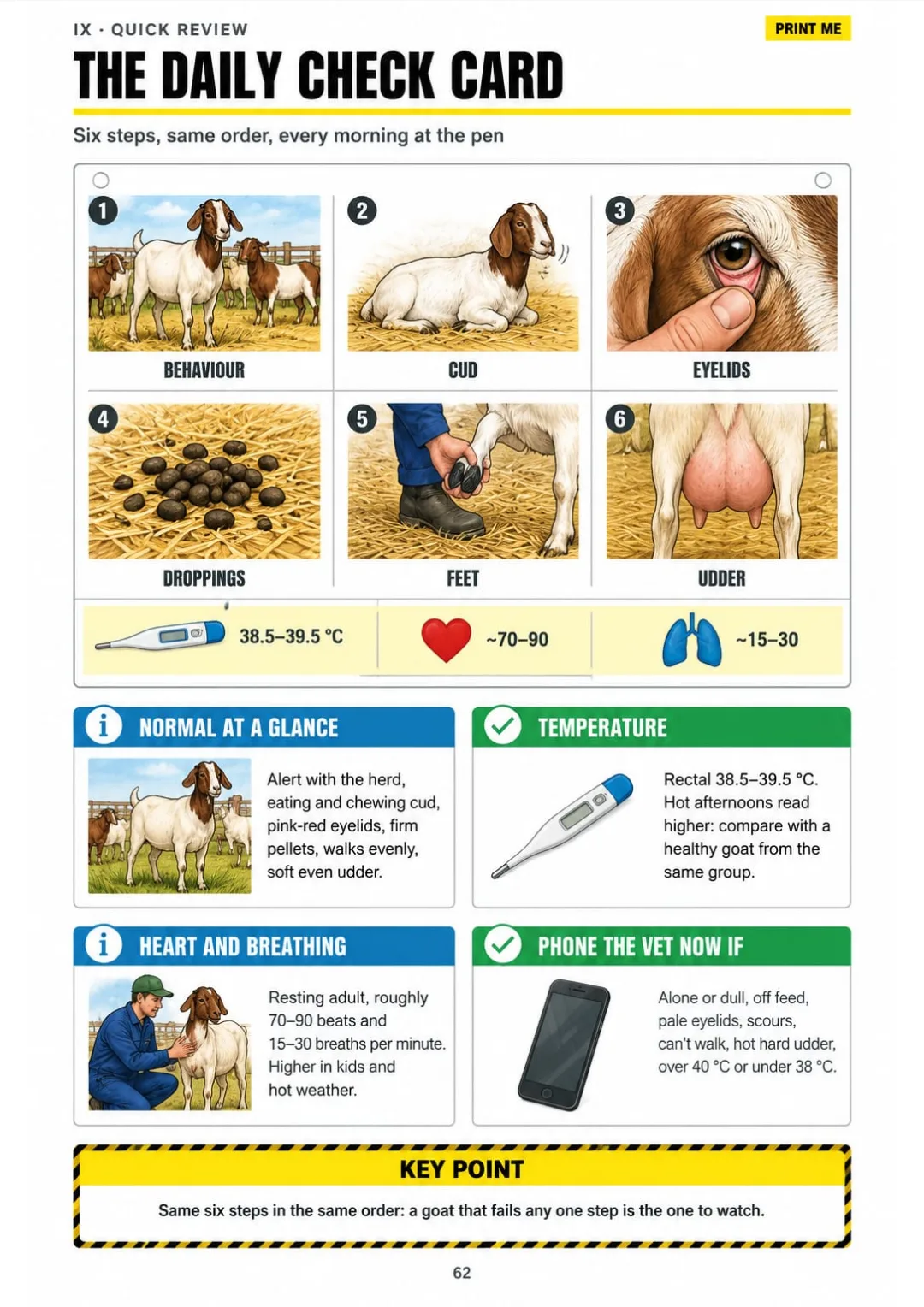
Normal rectal temperature 38.5–39.5 °C, over 40 °C is fever; heartbeat roughly 70–90, breathing 15–30 per minute.
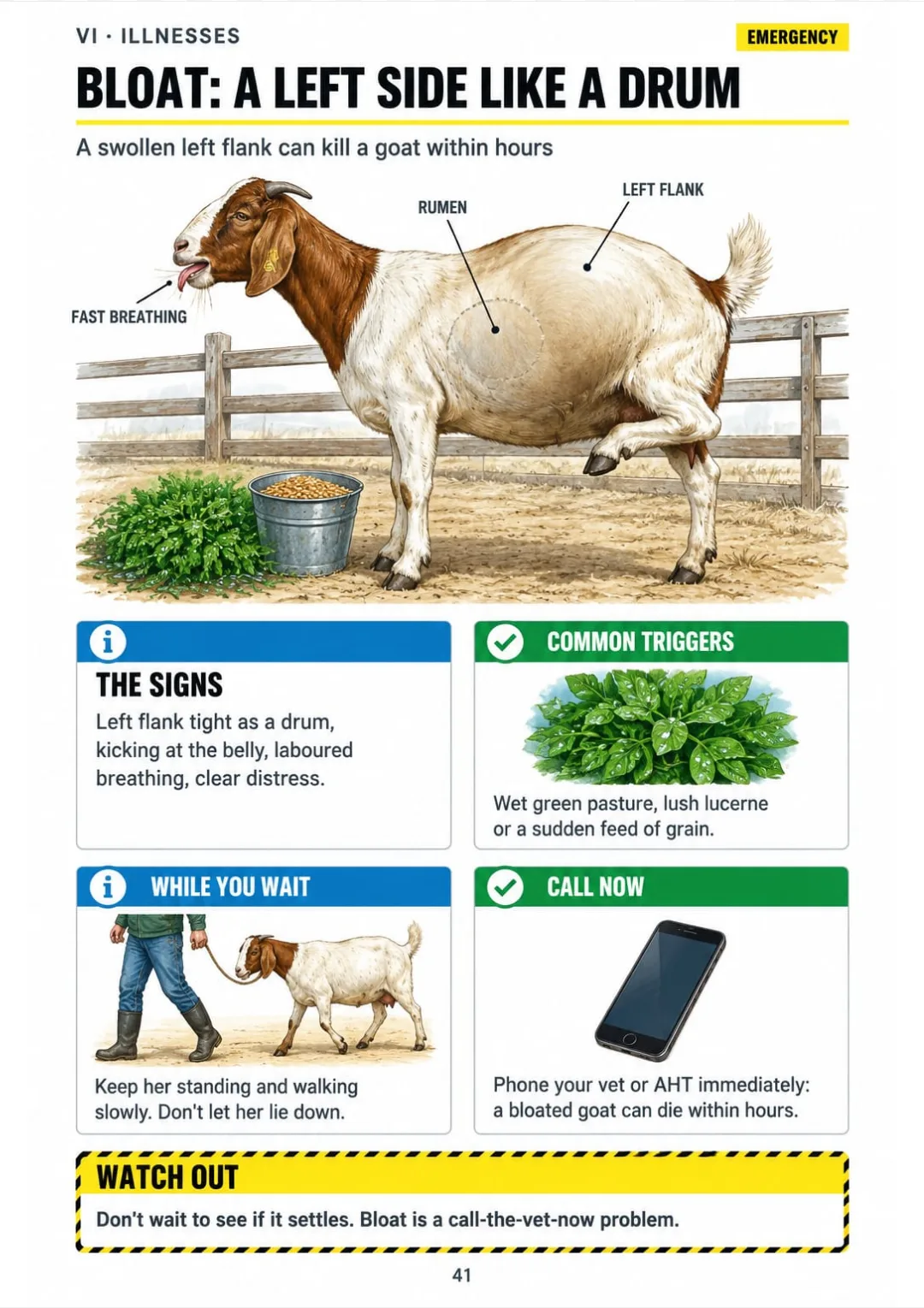
Bloat: left flank like a drum, after wet green feed or grain. Keep her walking, call the vet now.
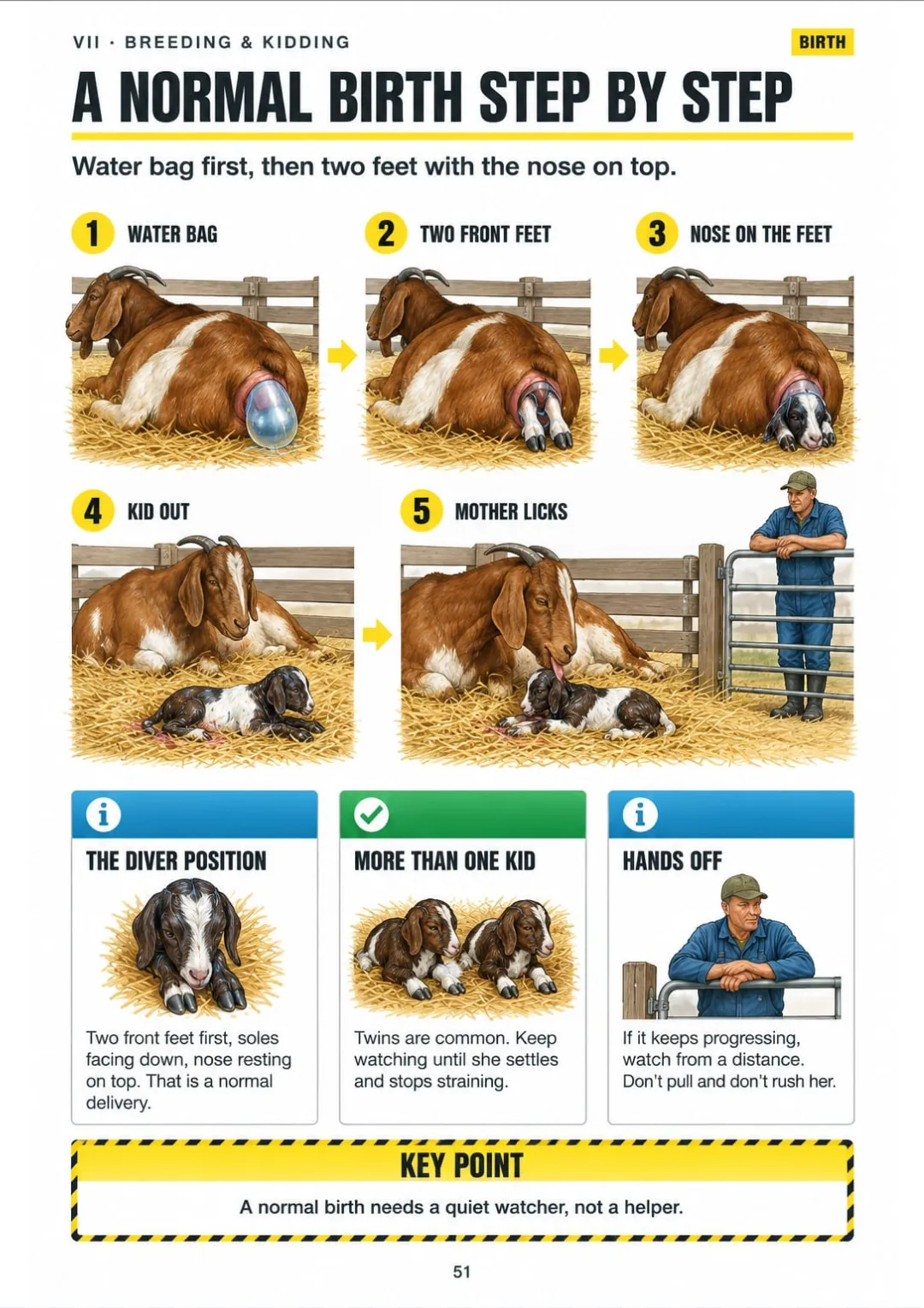
Normal birth: water bag, two front feet, nose resting on top like a diver.
6 steps in order + 38.5–39.5 °C, ~70–90 beats, ~15–30 breaths
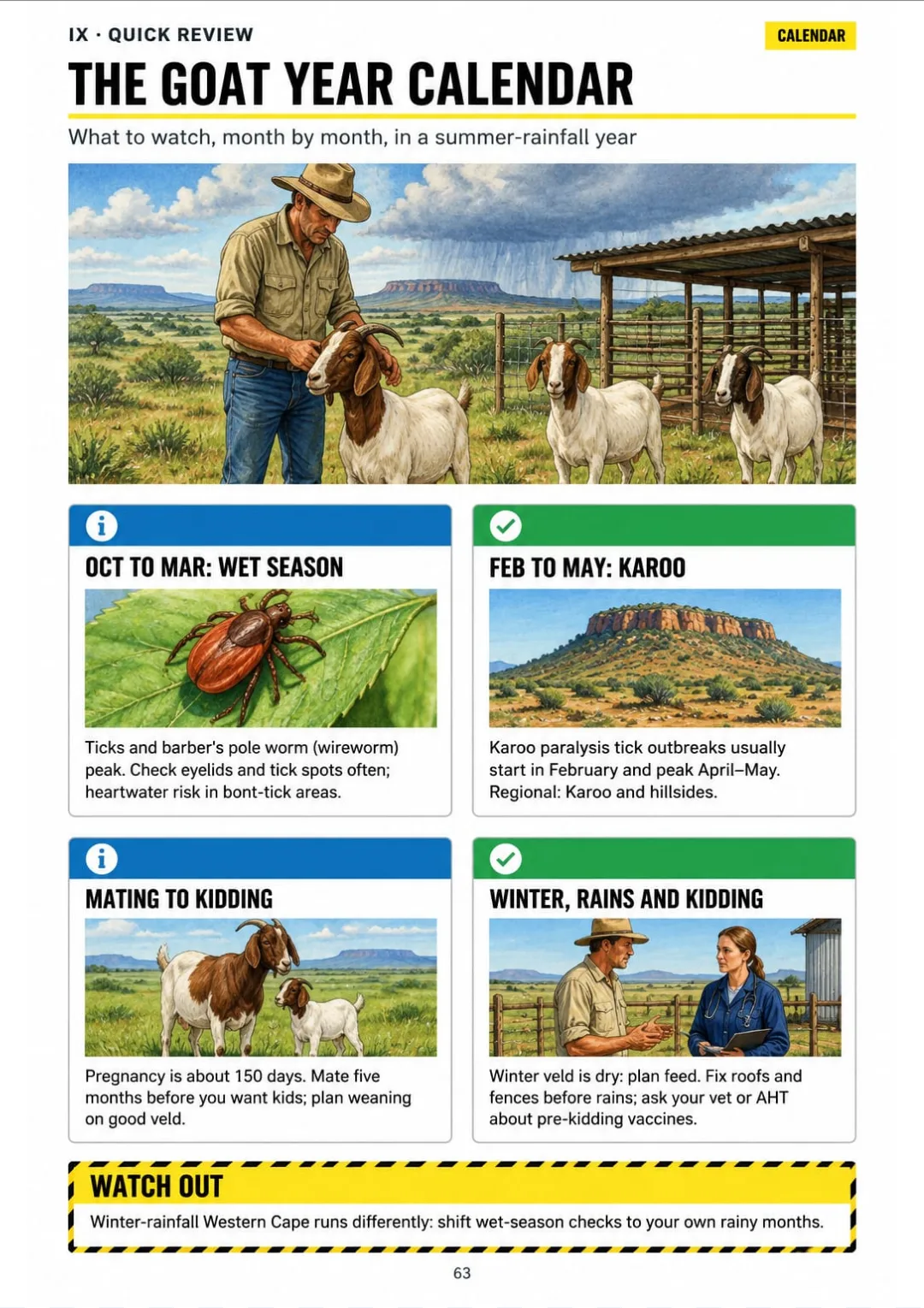
Ticks Oct–Mar · paralysis tick peaks Apr–May · kidding ~150 days after mating

Swipe to see more →

These are real pages from the book. The table of contents is the full one: 9 parts and 61 topics.

The Problem Isn't You. It's How It Was Explained.

You're kneeling next to a doe that's been lagging behind the herd. You pull down her lower eyelid and look. Is that pink, or is that pale?

The pamphlet gave it one line, halfway through a paragraph about worms: check the eyelid colour for anaemia. No picture of normal, no picture of pale. So you guess, and your neighbour guesses something else.

Red-pink eyelid is normal; pale or white points to anaemia from wireworm.

In this book the eyelid has its own page. A red-pink eyelid drawn next to a pale one and a white one, the gums beside them, and a box: pale or white points to anaemia from wireworm, and that's the moment to call the vet or the state animal health technician (AHT).

The rest of the daily check works the same way: behaviour, appetite and cud, droppings, feet and legs, the udder. Each one on its own page, and so are bloat, ticks and kidding.

Next morning you look at her eyelid and you know what you're seeing, without going back to the pamphlet or phoning around.

COMPARE FOR YOURSELF

The Same Topic, Two Ways to Learn It

THIS
  • Four Latin-sounding names in one long sentence
  • The rumen explained only in words
  • You go back to the pen still unsure
The ruminant stomach comprises four compartments, namely the rumen, reticulum, omasum and abomasum, of which the first two function together as a fermentation chamber wherein microbial populations degrade structural carbohydrates. Ingested forage is regurgitated as a bolus, remasticated and reswallowed, a process termed rumination, which facilitates particle size reduction and salivary buffering. Adequate dietary fibre is therefore essential to maintain rumen motility and pH, whereas abrupt dietary change may disturb the microbial balance and predispose the animal to digestive disorders.
FOR THIS
  • The rumen in one drawing
  • The four compartments in one box
  • Fibre every day and slow feed changes, in one box
Four compartments, one fermentation tank: fibre every day and a goat that chews the cud.
CONTENTS

Take a Look at the 9 Parts and 61 Topics

Before you start, shelter and water, feeding, the daily check, worms and ticks, common illnesses, kidding, records and rules, and a quick review: 65 pages, all illustrated

IBefore You Start · pp. 5-9
  1. How to Use This Book
  2. Choosing a Healthy Goat
  3. Reading a Goat's Age by Its Teeth
  4. South African Goat Breeds at a Glance
  5. Handling and Catching a Goat Calmly
IIShelter, Shade and Water · pp. 10-16
  1. A Dry Shelter Beats a Warm One
  2. Shade for the Summer Heat
  3. How Much Water a Goat Drinks
  4. Clean Water Points
  5. Fencing That Keeps Goats In
  6. Mud, Wet Floors and Sore Feet
  7. Planning the Pen Space
IIIFeeding and Body Condition · pp. 17-23
  1. Goats Browse, Sheep Graze
  2. The Rumen in One Drawing
  3. Body Condition Score from 1 to 5
  4. Feeding by Stage
  5. Change Feed Slowly
  6. Winter Veld and the Summer Flush
  7. Poisonous Plants in South Africa
IVThe Daily Check in Six Steps · pp. 24-32
  1. The Six Steps, Always in the Same Order
  2. Step 1: Behaviour
  3. Step 2: Appetite and Chewing the Cud
  4. Step 3: Eyelids and Gums
  5. Step 4: Droppings
  6. Step 5: Feet and Legs
  7. Step 6: The Udder
  8. Normal Temperature, Heartbeat and Breathing
  9. When to Call the Vet or the AHT
VWorms, Ticks and Skin · pp. 33-40
  1. Barber's Pole Worm
  2. Bottle Jaw and Other Worm Signs
  3. Why Not Every Goat Gets Dewormed
  4. Where Ticks Hide on a Goat
  5. Bont Tick and Heartwater
  6. Paralysis Ticks
  7. Orf: Scabs on Lips and Udder
  8. Lumps and Abscesses
VICommon Illnesses and Red Flags · pp. 41-47
  1. Bloat
  2. Pulpy Kidney
  3. Pregnancy Toxaemia
  4. Pneumonia
  5. Scours in Kids
  6. Diseases You Must Report
  7. Keeping Yourself Safe
VIIBreeding, Kidding and Kids · pp. 48-56
  1. Planning the Breeding Season
  2. About 150 Days of Pregnancy
  3. Signs That Kidding Is Close
  4. A Normal Birth Step by Step
  5. When Kidding Needs Help
  6. After the Birth
  7. Colostrum in the First Hours
  8. The Weak or Cold Kid
  9. Growing Kids to Weaning
VIIIRecords, Rules and Biosecurity · pp. 57-61
  1. Marking Your Goats
  2. Moving and Selling Goats
  3. New Goats Stay Apart First
  4. Simple Herd Records
  5. Working with Your Vet and AHT
IXQuick Review · pp. 62-65
  1. The Daily Check Card
  2. The Goat Year Calendar
  3. Red Flags on One Page
  4. Your Goat Care Box

One Page, One Topic, All Clear

Think of it this way:

It's a hot afternoon after the first summer rains and one doe is standing on her own, head down, not eating. You need to know what to look at first.

You open the book at the daily check and see the six steps drawn in order: behaviour, appetite, eyelids, droppings, feet, udder. Turn the page and there's when to call the vet or the AHT.

Bloat: left flank like a drum, after wet green feed or grain. Keep her walking, call the vet now.

It's the same with bloat, bont ticks, a weak kid, a birth that needs help or taking goats to a sale: each one has its own page.

Goat Keeping in Practice is 9 parts and 61 topics, all drawn, ending with a quick review: the daily check card, the goat year calendar and the red flags on one page.

What you see drawn, you don't have to memorize.

What's Inside Goat Keeping in Practice:

Ipp. 5-9

Before You Start

How to use the book, choosing a healthy goat, age by the teeth, South African breeds at a glance and calm handling.

IIpp. 10-16

Shelter, Shade and Water

A dry shelter, summer shade, how much water a goat drinks, clean water points, fencing, wet floors and sore feet, pen space.

IIIpp. 17-23

Feeding and Body Condition

Browsing versus grazing, the rumen, body condition from 1 to 5, feeding by stage, slow feed changes, winter veld and poisonous plants.

IVpp. 24-32

The Daily Check in Six Steps

Tell a goat that's fine from one that needs the vet: the six steps in order (behaviour, appetite and cud, eyelids and gums, droppings, feet and legs, udder), the normal numbers and when to call.

Vpp. 33-40

Worms, Ticks and Skin

Know the signs early, season by season: barber's pole worm, bottle jaw, why not every goat gets dewormed, where ticks hide, bont tick and heartwater, paralysis ticks, orf, lumps.

VIpp. 41-47

Common Illnesses and Red Flags

Bloat, pulpy kidney, pregnancy toxaemia, pneumonia, scours in kids, diseases you must report and keeping yourself safe.

VIIpp. 48-56

Breeding, Kidding and Kids

Go into kidding season knowing what normal looks like: the breeding season, about 150 days of pregnancy, signs that kidding is close, a normal birth, when it needs help, colostrum, the weak kid, weaning.

VIIIpp. 57-61

Records, Rules and Biosecurity

Marking your goats, moving and selling them, keeping new goats apart, simple herd records and working with your vet and AHT.

IXpp. 62-65

Quick Review

The daily check card, the goat year calendar, red flags on one page and your goat care box.

At the end of the book: A daily check card, a goat year calendar and the red flags on one page.
Plus: 2 Free Books

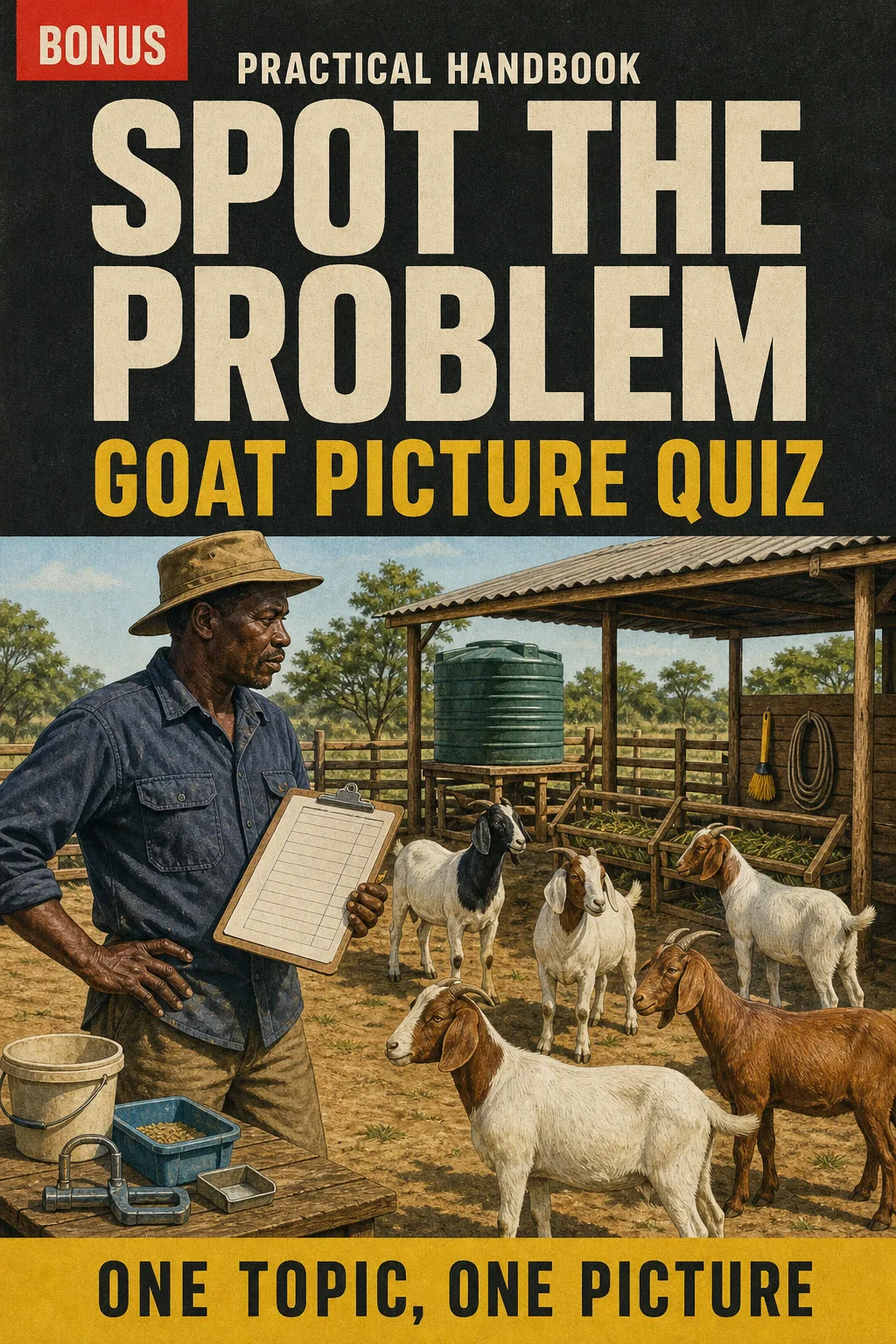
Spot the Problem: Goat Picture Quiz

BONUS 1: «Spot the Problem: Goat Picture Quiz»

Value on its own: US$ 17.90

Look at a drawn goat, find what is wrong and check your answer on the next page, so the daily check becomes a habit before you need it.

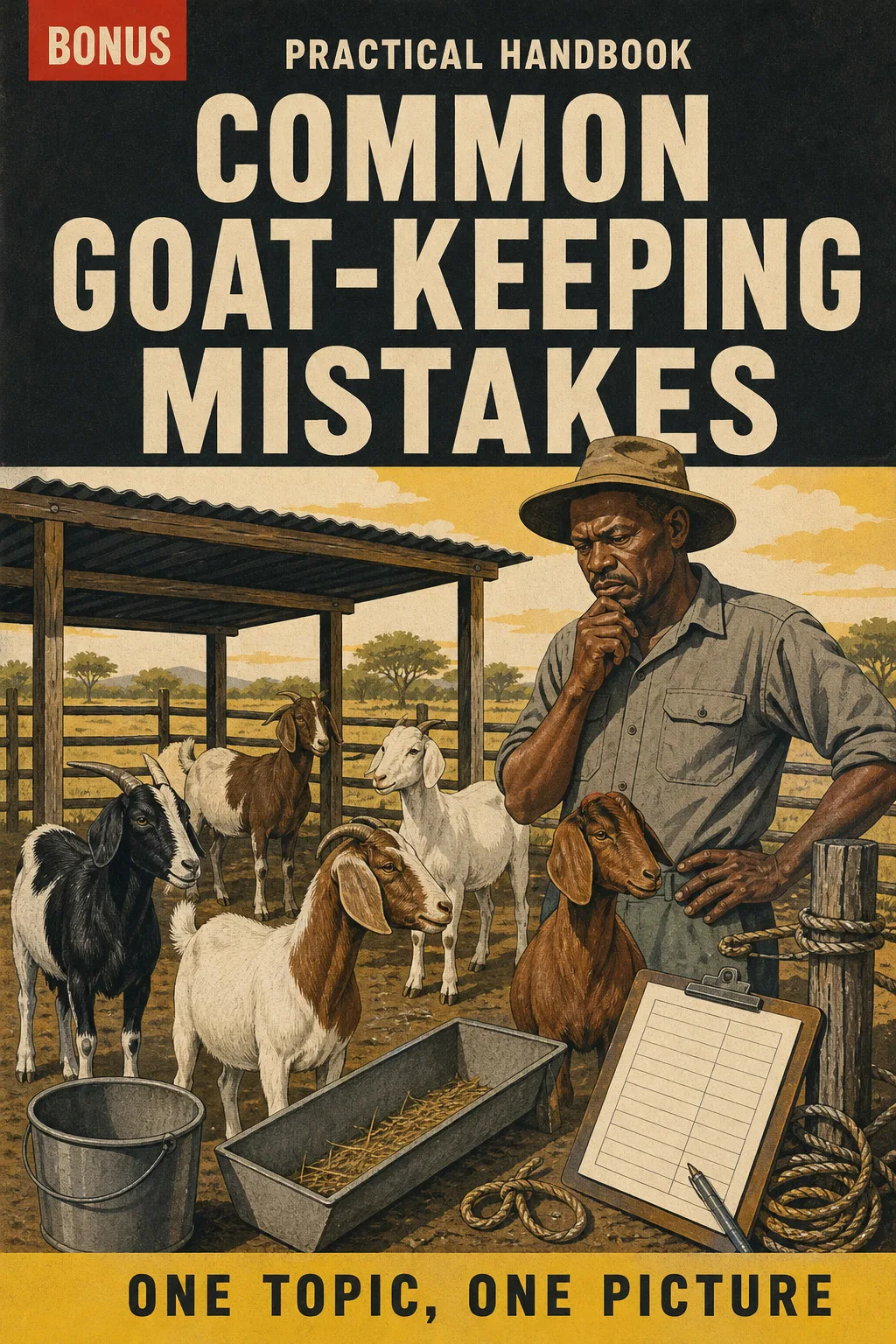
Common Goat-Keeping Mistakes

BONUS 2: «Common Goat-Keeping Mistakes»

Value on its own: US$ 14.90

The most frequent mistakes in small herds, one per page, each with what to do instead: easy to read again before the rains or before kidding.

Goat Keeping in Practice with 2 Free Books

  • Goat Keeping in Practice: 65 illustrated pagesUS$ 63
  • BONUS 1: Spot the Problem: Goat Picture QuizUS$ 17.90
  • BONUS 2: Common Goat-Keeping MistakesUS$ 14.90
  • High-resolution PDF to printIncluded
Total value US$ 95.80
YOUR PRICE:
US$ 27
You save US$ 68.80
YES, I WANT GOAT KEEPING IN PRACTICE FOR US$ 27

📄 This is a digital PDF book sent to your email: nothing is printed or shipped.

Secure purchaseEncrypted payment30-day guarantee

PDF by email: We email you Goat Keeping in Practice as a PDF, together with the two free books. It's a single payment: no installments, no extra charges.

Who This Book Is For

You're starting with a few goats

You're starting with a few goats

One order to follow from day one, instead of twenty tips that contradict each other. Each topic is a drawn page you can find quickly.

The rains and kidding season are coming

The rains and kidding season are coming

The worm and tick signs, a normal birth and the weak kid, each on its own page, so you can go over them before you need them.

You've kept goats for years

You've kept goats for years

A printed daily check and the red flags in one place, to tell what's normal from what needs the vet or the AHT.

Everything You Get Today

US$ 95.80US$ 27
YES, I WANT GOAT KEEPING IN PRACTICE FOR US$ 27

📄 This is a digital PDF book sent to your email: nothing is printed or shipped.

30DAYS
GUARANTEE

30-Day Guarantee

Try Goat Keeping in Practice for 30 days, bonus books included.

We refund everything if the file won't open, if the book isn't what you see here, if you were charged twice or if the email doesn't arrive. Just email us.

You pay once. No subscriptions.

Frequently Asked Questions

Is it for me if I only keep a few goats on family land?

Yes. It's written for small herds in South Africa, from a handful of goats to a few dozen, in plain English and metric units: our summer rains and ticks, the winter veld and local breeds such as the Boer goat, the Kalahari Red, the Savanna and indigenous veld goats. If you've kept goats for years, it gives you one fixed order to check them and the red flags in one place.

Where does the content come from?

From animal health guidance by the Department of Agriculture and the provincial veterinary services, and from South African law: the Animal Diseases Act 35 of 1984, the Animal Identification Act 6 of 2002 and the Stock Theft Act 57 of 1959.

Is this official material?

No. It's an independent illustrated book. It mentions those laws and bodies to say what it's based on, but it isn't issued or endorsed by any of them.

Does it replace a course or the vet?

No. It teaches you what to look at and when to call the vet or the state animal health technician. It gives no remedies, medicines or doses.

Are the practice questions from an exam?

No. The picture quiz in the bonus book is written for this book, so you can practise spotting problems. It isn't taken from any official exam or programme.

When and how do I get it?

The book and the 2 bonus books arrive as PDFs by email, at the address you enter at checkout. You can open them on your phone or print them.

Do I have to pay every month?

No. It's a one-off payment, with no subscription.

Can I have it on paper?

It's a PDF, not a posted book: you print it yourself, at home or at a print shop. That way you can keep the daily check card by the pen.

How does the refund work?

You have 30 days. We refund everything if the file won't open, if the book isn't what you see on this page, if you were charged twice or if the email doesn't arrive: just email us.

Before You Close This Page

No more rereading pamphlets that don't stick.

The eyelid, the rumen and a normal birth: you see them drawn.

You walk into the pen knowing where everything is.

Drawings make studying faster.

The book is right below.

One-time payment: US$ 27 · Guarantee: 30 days · PDF by email

YES, I WANT GOAT KEEPING IN PRACTICE FOR US$ 27

📄 This is a digital PDF book sent to your email: nothing is printed or shipped.